The use of intravenous immunoglobulinIntravenous immunoglobulin A therapy made from donated antibodies that may help reduce the mother’s immune response and protect the fetus. (IVIGIntravenous immunoglobulin A therapy made from donated antibodies that may help reduce the mother’s immune response and protect the fetus.) during pregnancy is common in cases of autoimmune blood disorders such as hemolytic disease of the fetus and newborn (HDFN).
While the mechanism of action is not clear, IVIG has been shown to help avoid complications by boosting the immune system. However, the administration of IVIG during pregnancy can reduce the effectiveness of certain vaccines and it is necessary to avoid live vaccines before and after IVIG treatment.
What is IVIG?
IVIG is a pooled antibodyAntibody A protein made by the immune system that recognizes and attacks foreign substances, such as bacteria, or in HDFN, fetal red blood cells carrying incompatible antigens. taken from the plasma of over 1000 healthy blood donors. It provides antibodiesAntibody A protein made by the immune system that recognizes and attacks foreign substances, such as bacteria, or in HDFN, fetal red blood cells carrying incompatible antigens. that are lacking in people living with autoimmune and inflammatory diseases. In pregnancies affected by HDFN, it is administered to the pregnant mother, and it has been shown to delay the onset of severe fetal anemiaAnemia A condition that occurs when the body doesn’t have enough healthy red blood cells to carry oxygen to its tissues. In HDFN, anemia occurs when maternal antibodies destroy fetal red blood cells. requiring intrauterine transfusions (IUTIntrauterine transfusion A procedure that delivers donor red blood cells to the fetus through the umbilical vein to treat severe anemia caused by HDFN.) and a lower rate of complications. When HDFN is diagnosed early and IVIG is initiated, the chances are higher for better outcomes for the fetus.
Learn more about HDFN symptoms and risks
IVIG is given via a vein and the infusion takes several hours. It may be repeated weekly, in pregnancies affected by HDFN at high risk of severe anemia or fetal hydrops.
There are some side effects associated with IVIG. They are usually mild to moderate and include headache, chills, fever, flushing, muscle or joint pain, nausea and vomiting. They mainly occur on first usage and if you change IVIG products.
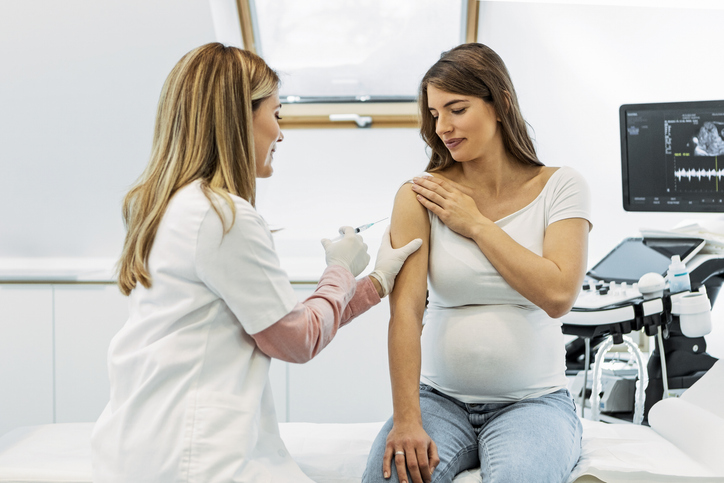
IVIG and vaccines
There are certain vaccines that are not safe during pregnancy, notably chicken pox (varicella), shingles or measles, mumps, rubella and HPV. Other vaccines are considered to be safe, including flu, Tdap (tetanus, diphtheria and whooping cough), RSV, Hepatitis B and Covid-19.
Vaccines can be less effective if they are given after IVIG. It is generally advised to avoid vaccines for six weeks following IVIG. Additionally, live vaccines are to be avoided for three weeks prior to IVIG and for three months following IVIG. As a general rule, it is advised to wait at least six weeks after receiving IVIG before having any vaccines.