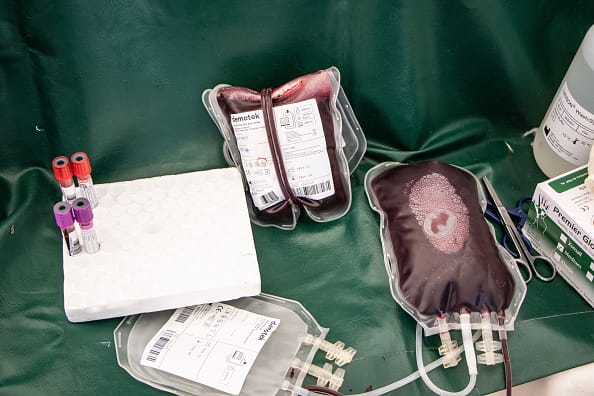
Babies with hemolytic disease of the fetus and newborn (HDFN) sometimes require a blood transfusion to resolve anemiaAnemia A condition that occurs when the body doesn’t have enough healthy red blood cells to carry oxygen to its tissues. In HDFN, anemia occurs when maternal antibodies destroy fetal red blood cells. or jaundiceJaundice A common symptom of HDFN, jaundice is caused by excess bilirubin and is characterized by a yellow tint to the skin or eyes., which can occur in utero or following delivery.
In some cases in which a large volume of blood is replaced, your baby’s blood type can temporarily change to match the blood type of the blood donor. It’s not a cause for concern, and eventually, your baby’s original blood type will change back to what it was before they ever had a transfusion.
What is HDFN?
Hemolytic disease of the fetus and newborn (HDFN) is an immune-mediated red blood cell disorder that occurs when a baby’s RBCs break down quickly, which is called hemolysis. HDFN is caused by a mismatch between a mother’s and her baby’s blood type (A, B, AB, or O) or Rhesus (RhRh factor A protein or antigen found on red blood cells. When an Rh-negative mother carries an Rh-positive fetus, her immune system may make antibodies that attack the fetus' red blood cells.) factor (Rh-positiveRh-Positive A blood type trait that means your red blood cells have the Rh(D) antigen. or Rh-negativeRh-Negative A blood type trait that means your red blood cells lack the Rh(D) antigen.) during pregnancy.
How can a blood type change following a blood transfusion?
In babies diagnosed with HDFN or other hematologic diseases, intrauterine blood transfusions can be lifesaving for the fetus. Transfusions can help minimize symptoms of anemia and hyperbilirubinemiaHyperbilirubinemia A common cause of jaundice, this refers to higher than normal bilirubin levels in the blood., which can potentially cause heart failure and life-long neurological damage if not effectively treated.
Learn more about HDFN symptoms and risks
When a blood transfusion is required, a multidisciplinary team of transfusion specialists, pediatric nurses, neonatologists and hematologists pay close attention to blood matching. ABO and Rh typing of the baby will be performed to ensure the baby, and the donor are compatible. To reduce the risk of immune reactions, doctors usually choose to use O group, Rh-negative blood, as it is the universal donor blood type. This means that it is compatible with A and B blood types. Transfusions of the wrong blood type can be potentially fatal.
By replacing the baby’s red blood cells that have been damaged by maternal antibodiesAntibody A protein made by the immune system that recognizes and attacks foreign substances, such as bacteria, or in HDFN, fetal red blood cells carrying incompatible antigens. and replacing them with donor red blood cells, it is possible to avoid or delay the onset of severe anemia. When blood transfusions involve a large volume of blood, almost the entirety of the baby’s blood can be replaced with donor blood. This effectively changes the baby’s blood type to that of the blood donor. However, the change in blood type is only temporary.
How does the original blood type return?
With time, the baby’s bone marrow begins to produce new red blood cells, and the donor cells will naturally break down and be eliminated. This might take several weeks or months depending on the pace of the baby’s recovery from HDFN. Doctors usually won’t test the blood type during this time, as they know they will not get a true reading.
Sign up here to get the latest news, perspectives, and information about HDFN sent directly to your inbox. Registration is free and only takes a minute