
What type of care do neonatologists provide to newborns with HDFN?
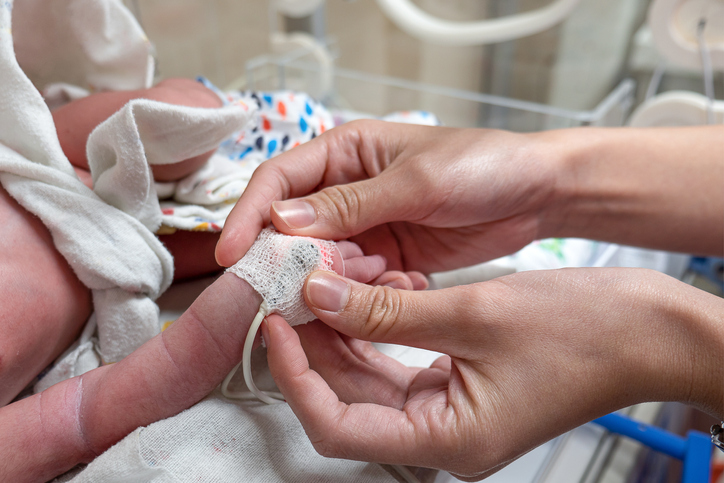
When hemolytic disease of the fetus and newborn (HDFN) is present, neonatologists provide the neonate with postnatal care. These physicians are key members of the health care team treating the newborn. In their role as chief care providers of the newborn, their responsibilities are extensive.
What is HDFN?
Hemolytic disease of the fetus and newborn (HDFN) is an immune-mediated red blood cell (RBC) disorder that occurs when a baby’s RBCs break down quickly, which is called hemolysis. HDFN is caused by a mismatch between a mother’s and her baby’s blood type (A, B, AB, or O) or Rhesus (RhRh factor A protein or antigen found on red blood cells. When an Rh-negative mother carries an Rh-positive fetus, her immune system may make antibodies that attack the fetus' red blood cells.) factor (Rh-positiveRh-Positive A blood type trait that means your red blood cells have the Rh(D) antigen. or Rh-negativeRh-Negative A blood type trait that means your red blood cells lack the Rh(D) antigen.) during pregnancy. Numerous antibodiesAntibody A protein made by the immune system that recognizes and attacks foreign substances, such as bacteria, or in HDFN, fetal red blood cells carrying incompatible antigens. to RBC antigensAntibody A protein made by the immune system that recognizes and attacks foreign substances, such as bacteria, or in HDFN, fetal red blood cells carrying incompatible antigens. can be linked to HDFN, such as those from the ABO and Rh blood groupBlood group A classification of blood based on inherited markers found on red blood cells. The ABO and Rh blood groups are most common in HDFN. systems.
Neonatologists receive specialized training, so they can tackle the most difficult, high-risk situations that occur during the neonatal period. The neonatal period is considered the first four weeks of a child’s life.
When newborns are premature, or experience a serious disorder, injury or birth defect, neonatologists may be called upon at the time of delivery and in the ensuing newborn care. Among babies in whom an issue has been recognized prior to birth, neonatologists may consult with the mother’s obstetrician throughout her pregnancy.
In the U.S., neonatologists receive certification from the American Board of Pediatrics (ABP) and the ABP Subboard of Neonatal-Perinatal Medicine.
What medical events might occur in a newborn with HDFN?
Expectant mothers do not experience any symptoms associated with HDFN. Among fetuses with HDFN, however, possible signs and symptoms of the disorder may include the following:
Anemia associated with hemolysis—the destruction of red blood cells (RBCs)—is observed often, which can vary from being very mild to being very severe.
Neutropenia, in which levels of neutrophils—a type of white blood cell—are lower than normal, has been reported in newborns with HDFN.
Thrombocytopenia, in which platelet levels are low, has been reported in HDFN. Neonates with thrombocytopenia may experience bleeding.
Hyperbilirubinemia is observed frequently in HDFN. Newborns who develop hyperbilirubinemiaHyperbilirubinemia A common cause of jaundice, this refers to higher than normal bilirubin levels in the blood. have too much bilirubinBilirubin A yellow substance produced when red blood cells break down. High bilirubin levels in newborns with HDFN can cause jaundice or, in severe cases, brain damage. in their bloodstream. Certain neurologic indicators of hyperbilirubinemia may be seen as well.
What is bilirubin?
Bilirubin is a molecular byproduct of the breakdown of hemoglobin, the protein responsible for holding the oxygen transported in red blood cells. It is normally transported to the liver, where it undergoes a transformation called conjugation, and is then excreted from the body through the intestines. JaundiceJaundice A common symptom of HDFN, jaundice is caused by excess bilirubin and is characterized by a yellow tint to the skin or eyes. is caused by the accumulation of bilirubin in the blood, which is known as hyperbilirubinemia.
What services are provided by neonatologists?
Neonatologists can diagnose and treat infants with such conditions as infections or breathing disorders. In addition, they make certain that critically ill newborns receive appropriate nutrition, which will help with their growth and healing. These doctors also treat infants who experience a life-threatening medical situation.
Neonatologists work primarily in children’s hospitals, large community hospitals, and university medical centers. They often perform their work in newborn intensive care units and specialized nurseries.
The equipment used by neonatologists is typically designed for the treatment of the smallest patients.
Read more about HDFN symptoms and risks
What neuromuscular signs and symptoms do neonatologists look for in neonates with HDFN?
Severe neonatal hyperbilirubinemia can be linked to bilirubin-induced encephalopathy. This condition, which can be associated with visual, auditory, dental, language, and neuromotor impairment, is also known as kernicterus. In fact, kernicterusKernicterus A rare but serious brain condition caused by very high bilirubin levels. can cause permanent brain damage.
The possible neuromuscular signs of HDFN include poor feeding/sucking reflex; hypotonia (decreased or poor muscle tone), hypertonia (too much muscle tone, which is linked to difficulty moving muscles); seizures; and coma.
What jobs are performed by neonatologists in newborns with HDFN?
Neonatologists are the doctors who administer intensive phototherapy to newborns with hyperbilirubinemia. PhototherapyPhototherapy A treatment that uses special blue light to help newborns break down bilirubin and prevent kernicterus. is considered the first treatment option for jaundice among neonates.
RBC transfusions and exchange transfusions are used by neonatologists to treat ongoing anemiaAnemia A condition that occurs when the body doesn’t have enough healthy red blood cells to carry oxygen to its tissues. In HDFN, anemia occurs when maternal antibodies destroy fetal red blood cells. in newborns.
Babies with HDFN will need to undergo laboratory and molecular diagnostic tests, which typically will be requested by a neonatologist. Certain tests are performed to verify a newborn’s ABO blood group type and Rhesus (Rh) status.
Cooperation among the multidisciplinary team
Neonatologists are part of a multidisciplinary prenatal and postnatal care team that includes obstetricians/gynecologists, maternal fetal medicine specialists/perinatologists, transfusion medicine specialists, technicians who perform laboratory monitoring and molecular diagnostic technicians.

