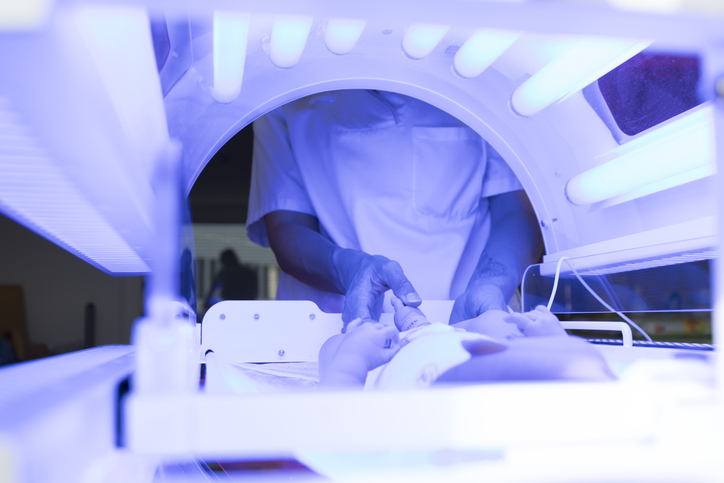
Phototherapy is the recommended treatment of jaundice (hyperbilirubinemia), which can be caused by hemolytic disease of the fetus and newborn (HDFN) in neonates. Phototherapy is usually required in the first two weeks of a newborn’s life to reduce the levels of bilirubin in the blood, which causes the yellowing of the skin and whites of the eyes.
If bilirubin levels do not fall or continue to rise, the newborn is at risk of severe long-term consequences. However, research has shown that phototherapy can also potentially have a long-term impact on babies, including certain cancers, skin conditions and allergies.
What is jaundice?
Jaundice is regularly observed in healthy newborns, but it is also a common symptom of hemolytic disease of the fetus and newborn (HDFN), a red blood disorder that can occur during pregnancy and post-delivery if the mother and baby have incompatible blood types. It causes severe anemia in vitro and can lead to jaundice in the newborn.
Jaundice often disappears without any medical intervention, but phototherapy is used in cases where bilirubin levels don’t fall naturally, or even start to increase. If left untreated, jaundice can lead to kernicterus which may cause permanent brain damage, seizures and deafness.
Learn more about HDFN symptoms and risks
The use of blue light to reduce high levels of bilirubin in newborns suffering from jaundice has been the most effective treatment of neonatal jaundice since the 1950s. While widely considered safe, it has some minor side effects, including diarrhea, dehydration, skin rashes and more rarely, “Bronze Baby” syndrome, in which the baby’s skin turns a grayish brown color. These side effects cause short-term irritation or concern, but potential long term side effects can be more serious.
Potential long-term side effects of phototherapy
Several studies have been conducted into the long-term effects of neonatal phototherapy, and a greater incidence of childhood cancer has been observed in children exposed to phototherapy, particularly in solid tumors, including brain/central nervous system cancers. However, more studies are required to confirm phototherapy as a risk factor in childhood cancer.
There is also evidence to suggest a link between phototherapy and melanocytic nevi, skin cancer and retinal damage. The duration of phototherapy may also be a factor in the risk of allergic disorders, such as asthma, atopic dermatitis and food allergies. In one study, a long treatment duration was associated with the risk of allergic disorders.
For now, phototherapy remains the treatment of choice for neonatal jaundice and is widely considered safe and effective. Though more research needs to be done into the long-term side effects of phototherapy, it remains the best treatment for any infant diagnosed with jaundice or HDFN.