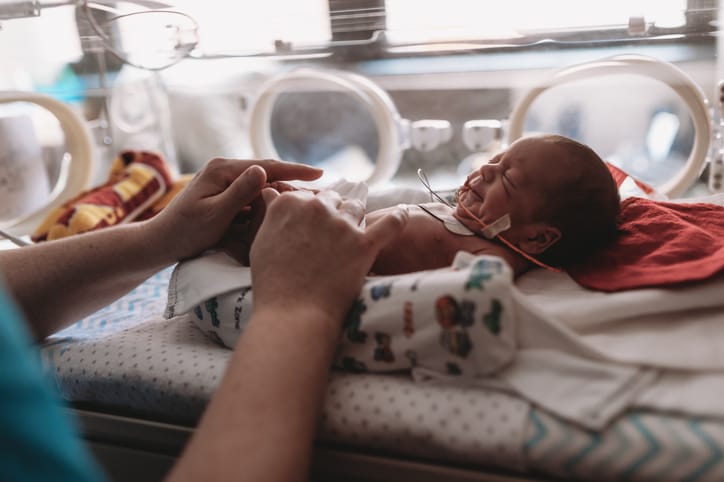
Having a child admitted into a neonatal intensive care unit (NICU) can be a scary experience.
As a parent, it’s normal to experience grief of disappointment over your infant’s stay in the NICU. After all, you and your partner have likely spent considerable time preparing to bring your newest family member home.
Nevertheless, safety comes first, and if your doctor decides that your child needs intensive care monitoring, you can be sure that this decision is made in your child’s best interest. Children who suffer from congenital disorders such as hemolytic disease of the fetus and newborn (HDFN) typically need to be monitored for a period of time to ensure that your child is truly out of danger before being safe enough to discharge home.
Visiting your child in the NICU
Hospital protocols vary significantly, both here in the United States and across the globe. In some developing countries, family members function as a sort of informal caregivers in their own right; in this sense, nurses only offer clinical and supplementary care.
However, in the U.S., if your child is administered into intensive care, healthcare professionals do most of the work. Depending on the specific visitation policies of your ward, you may be able to spend more or less time with your child. The reason for restricted visiting hours is to ensure that clinicians can do the needful with minimal distractions and interruptions.
Read more about HDFN testing and diagnosis
Of course, all infants need their parents. They need them for breastfeeding, offering comfort and parent-child bonding.
Your presence as a parent may be helpful when doctors want to talk with you a little more about your pregnancy history, the birthing process, your ability to support your child’s care, and whether you are well-versed at warning signs that demand immediate attention. If you can visit your child, it is important that the strictest hygiene standards are followed.
Communicate with your care team
It is important to remember that your child is in intensive care because doctors decide that this is the best place for them. The close observation that this affords means that immediate therapeutic actions can be initiated in the event that the child is clinically unstable.
The good news is that intensive care admissions of children born with HDFN are typically short. Once the most urgent matters to resolve is to ensure that excess bilirubin is removed and that the child is soon able to lead a healthy lifestyle with occasional follow-up.
If you feel like you do not understand the advantages of intensive care, or if you feel like you’re not able to spend as much time with your child, do speak to your doctor. Studies indicate that newborns need their mothers, and spending time with their parent can have a calming effect on them.
If physical interactions with your child are limited, raise your concerns with your doctor, who will be able to advise you if there is a way forward for more in-person interactions.
Remember, the point of a child being admitted into intensive care is to get the child out and home with you as soon as possible. Typically, with innovative approaches such as phototherapy for hDFN, this can typically be achieved in a matter of days. After discharge, you will need to attend any scheduled follow-up appointments, which will allow doctors to pick up on any changes in your child’s health.
Sign up here to get the latest news, perspectives, and information about HDFN sent directly to your inbox. Registration is free and only takes a minute.