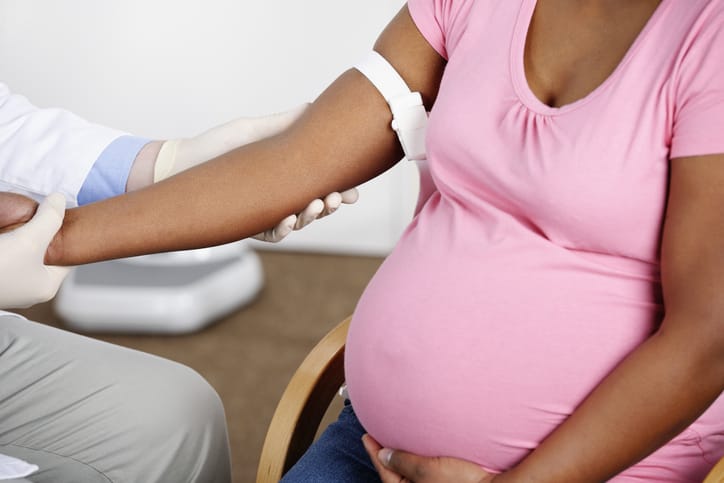
In pregnancies affected by hemolytic disease of the fetus and newborn (HDFN), the greatest risk to the fetus is the onset of severe anemiaAnemia A condition that occurs when the body doesn’t have enough healthy red blood cells to carry oxygen to its tissues. In HDFN, anemia occurs when maternal antibodies destroy fetal red blood cells., which can have life-threatening consequences for the fetus if not urgently treated.
Intrauterine transfusions (IUTs) are an effective way of treating fetal anemia and preventing complications. The transfusion can be administered in two different ways: into the umbilical vein or the fetus’ abdomen.
What is HDFN?
Hemolytic disease of the fetus and newborn (HDFN) is an immune-mediated red blood cell disorder that occurs when a baby’s RBCs break down quickly, which is called hemolysis. HDFN is caused by a mismatch between a mother’s and her baby’s blood type (A, B, AB, or O) or Rhesus (RhRh factor A protein or antigen found on red blood cells. When an Rh-negative mother carries an Rh-positive fetus, her immune system may make antibodies that attack the fetus' red blood cells.) factor (Rh-positiveRh-Positive A blood type trait that means your red blood cells have the Rh(D) antigen. or Rh-negativeRh-Negative A blood type trait that means your red blood cells lack the Rh(D) antigen.) during pregnancy.
What is fetal anemia?
In HDFN, when the pregnant mother’s antibodiesAntibody A protein made by the immune system that recognizes and attacks foreign substances, such as bacteria, or in HDFN, fetal red blood cells carrying incompatible antigens. cross the placenta and attack the fetus’s red blood cells it leads to a low red blood cell count or anemia in the fetus. Red blood cells carry oxygen to the organs and tissue and the onset of anemia reduces their function, putting pressure on the heart as it has to pump harder. Consequences include a build of fluid around the heart and other organs and eventually, heart failure.
What is an intrauterine transfusionIntrauterine transfusion A procedure that delivers donor red blood cells to the fetus through the umbilical vein to treat severe anemia caused by HDFN.?
An IUTIntrauterine transfusion A procedure that delivers donor red blood cells to the fetus through the umbilical vein to treat severe anemia caused by HDFN. is the preferred way of treating fetal anemia. It is an invasive procedure where donated red blood cells compatible with the fetus’s blood type are injected into the fetus via an ultrasoundUltrasound An imaging test that uses sound waves to monitor fetal growth, development and signs of complications during pregnancy.-guided needle. It may have to be repeated every few weeks during pregnancy to ensure the best outcomes.
Learn more about HDFN treatment and care
Intravascular transfusion vs intraperitoneal transfusion
The most common type of IUT is the intravascular transfusion (IVT). This works by inserting the needle into the pregnant mother’s abdomen and then into the umbilical vein, where it goes directly into the fetus’s circulation. It is preferred in fetuses older than 18 to 20 weeks gestation and quickly treats fetal anemia.
Intraperitoneal transfusions (IPT) are also performed by inserting a needle into the pregnant mother’s abdomen, but the needle is then inserted into the fetal peritoneal cavity or abdomen. IPTs are used earlier in HDFN-affected pregnancies when the fetus’s umbilical cord is too small for use in an IVT. It is a safe and effective way of treating severe early-onset fetal anemia, but it works more slowly than an IVT.
What are the associated risks of IUTs?
While IUTs are critical to treating fetal anemia, some risks are associated with the procedure. In the pregnant mother, the needle can trigger cramping or vaginal bleeding or result in infection. The fetus may also become distressed, leading to early labor or an emergency cesarean delivery. However, these complications are rare, and the risk to the fetus that accompanies not performing an IUT is much higher.