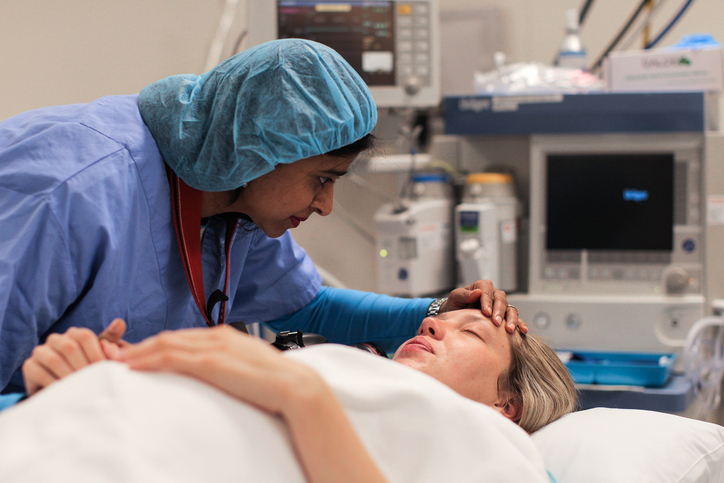
Women experiencing high-risk pregnancies, such as those with hemolytic disease of the fetus and newborn (HDFN), often rely on the care of a specialist multidisciplinary healthcare team.
Often, additional emotional and practical support during pregnancy, childbirth and post-delivery is sought from a midwife or doula. In cases where families are confronted with the loss of their baby during pregnancy, a bereavement doula is a valuable resource to support families as they move through their grief.
What is HDFN?
Hemolytic disease of the fetus and newborn (HDFN) is an immune-mediated red blood cell (RBC) disorder that occurs when a baby’s RBCs break down quickly, which is called hemolysis. HDFN is caused by a mismatch between a mother’s and her baby’s blood type (A, B, AB, or O) or Rhesus (Rh) factor (Rh-positive or Rh-negative) during pregnancy. Numerous antibodies to RBC antigens can be linked to HDFN, such as those from the ABO and Rh blood group systems.
HDFN is a rare disease that has increasingly better outcomes due to early detection through routine prenatal blood type screening, prevention with the administration of anti-D immunoglobulin, increased care during at-risk pregnancies, early diagnosis and timely medical intervention. However, in severe cases, HDFN can lead to heart failure in the baby, resulting in fetal death, or death during or following delivery.
At the time of a ‘life-limiting’ diagnosis, a bereavement or loss doula can join the healthcare team and support the mother and her family throughout this journey. They often have special training in handling perinatal loss and helping families navigate the impact of the death of their baby and the grieving process.
The role of a bereavement doula
The role of a bereavement or loss doula is multi-faceted and includes advising on labor and post-partum practices following late miscarriage or stillbirth and providing emotional support to grieving families. Tailored to the individual needs of each family, a bereavement doula offers emotional support, information and practical resources, encouragement and guidance as they cope with their loss. In the case of stillbirth, she accompanies the mother as she delivers her baby and helps parents create memories of their lost baby.
It is important to remember that a bereavement doula can accompany families at any part of their journey of loss. It may be before, during or after the death of their baby.
Where to find a bereavement doula
Your healthcare team or hospital will be able to advise you on local resources. If you prefer to do your own research, the directories of these doula bereavement organizations may be of help:
It is advisable to meet with two to three possible bereavement doulas to be sure you find the best fit for you and your family. Here are some questions to ask when interviewing a potential loss doula:
- How long have you been working as a bereavement doula?
- What training or certifications do you have?
- Why did you choose to become a bereavement doula?
- What kind of support do you offer?
- What are your fees?
Keep in mind that bereavement doulas are not required to have any formal certification, but a number of recommended training programs exist, such as certification at Stillbirthday birth and bereavement, Birth Arts International or Sister in Loss Training.