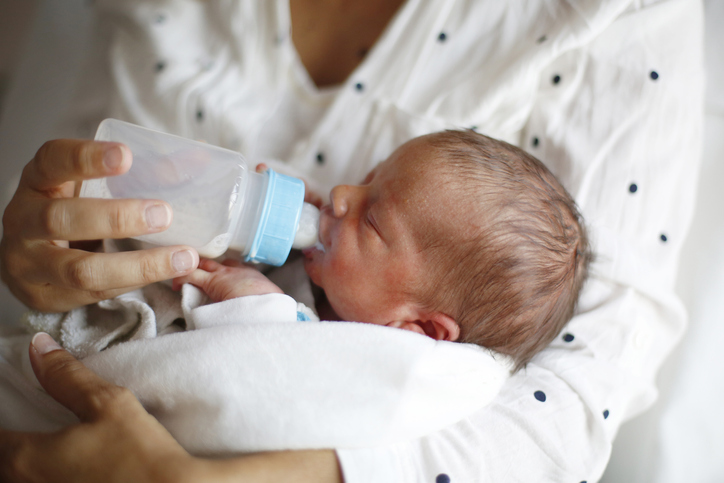
A newborn affected by hemolytic disease of the fetus and newborn (HDFN) will most likely suffer from anemiaAnemia A condition that occurs when the body doesn’t have enough healthy red blood cells to carry oxygen to its tissues. In HDFN, anemia occurs when maternal antibodies destroy fetal red blood cells. and jaundiceJaundice A common symptom of HDFN, jaundice is caused by excess bilirubin and is characterized by a yellow tint to the skin or eyes. and may also have difficulty feeding.
Jaundice is caused by a buildup of bilirubinBilirubin A yellow substance produced when red blood cells break down. High bilirubin levels in newborns with HDFN can cause jaundice or, in severe cases, brain damage. in the blood and is dangerous to the baby if it is not eliminated or if bilirubin levels continue to rise. A newborn will need plenty of fluids – breast milk or formula – to help the liver break down the bilirubin and eliminate it via their stools. However, complications including prematurity and symptoms of HDFN may mean that breastfeeding is not an option and nutrition is delivered in other ways.
What is HDFN?
Hemolytic disease of the fetus and newborn (HDFN) is an immune-mediated red blood cell (RBC) disorder that occurs when a baby’s RBCs break down quickly, which is called hemolysis. HDFN is caused by a mismatch between a mother’s and her baby’s blood type (A, B, AB, or O) or Rhesus (RhRh factor A protein or antigen found on red blood cells. When an Rh-negative mother carries an Rh-positive fetus, her immune system may make antibodies that attack the fetus' red blood cells.) factor (Rh-positiveRh-Positive A blood type trait that means your red blood cells have the Rh(D) antigen. or Rh-negativeRh-Negative A blood type trait that means your red blood cells lack the Rh(D) antigen.) during pregnancy. Numerous antibodiesAntibody A protein made by the immune system that recognizes and attacks foreign substances, such as bacteria, or in HDFN, fetal red blood cells carrying incompatible antigens. to RBC antigensAntibody A protein made by the immune system that recognizes and attacks foreign substances, such as bacteria, or in HDFN, fetal red blood cells carrying incompatible antigens. can be linked to HDFN, such as those from the ABO and Rh blood groupBlood group A classification of blood based on inherited markers found on red blood cells. The ABO and Rh blood groups are most common in HDFN. systems.
Newborns with HDFN are often born prematurely
Newborns with HDFN are often delivered prematurely, with an average gestational age at birth of 34 to 36 weeks. Preterm babies require specialized care, which they often receive in the neonatal intensive care unit (NICU). Babies with HDFN are at risk of serious outcomes if their anemia and jaundice are not quickly and effectively treated.
Premature birth and HDFN can both affect the newborn’s ability to feed. In preterm babies, this may be because the digestive system is not yet fully developed, but it can also occur if the infant cannot yet swallow and suck. This will rule out breastfeeding, and the baby will require either an intravenous line into the bloodstream to deliver much-needed nutrition or a tube into the nose or mouth that delivers formula.
HDFN causes fatigue and irritability, and the high levels of bilirubin in the blood can affect the baby’s sucking reflex. In addition to prompt treatment of HDFN symptoms, for babies affected by HDFN, adequate nutrition and hydration is essential to their recovery.
Breastfeeding babies with HDFN
While the benefits of breastfeeding for babies are undeniable, recent research has found that it may not be as beneficial in newborns with HDFN. A study showed evidence that the mother’s anti-D antibodies that attack the baby’s red blood cells by crossing the placenta during pregnancy may also be transferred via breast milk. While further research is required, breastfeeding may be a factor in cases where the baby’s bilirubin levels continue to rise despite treatment.