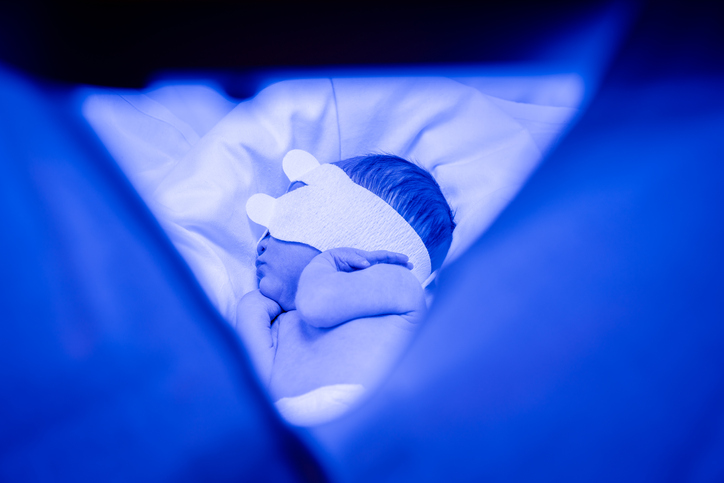
Hyperbilirubinemia or jaundice is relatively common in newborns, with a rate of around 60%. It is generally mild, and while some cases may require treatment, it often goes away without treatment. However, jaundice as a symptom of hemolytic disease of the fetus and newborn (HDFN) in newborns can have more serious outcomes if left untreated.
HDFN is a rare red cell blood disease that occurs when a pregnant mother and her baby have incompatible blood types or factors. It most commonly arises when a mother is Rh-negative and her baby Rh-positive. This causes the mother’s immune system to attack her baby’s blood, which then breaks down the red blood cells. Without early diagnosis and treatment, fetuses affected by HDFN are at risk of greater complications during pregnancy, birth and post-delivery.
Even if it is not related to HDFN, jaundice in newborns can vary in severity and potential complications can have serious consequences. Treatment options are the same, but in the case of neonates with HDFN, the risk of developing complications are much higher.
Neonatal jaundice
Easily detected in the yellowish tinge of the baby’s skin, eyes and tongue three to seven days following birth, jaundice is diagnosed with a blood test that tests the levels of bilirubin in the baby’s blood.
Jaundice in newborns occurs when red blood cells break down, creating a yellow substance called bilirubin. In utero, this bilirubin is removed via the placenta and broken down by the mother’s liver. Post-delivery, the newborn’s liver is still quite immature, and it must process the bilirubin itself. If bilirubin builds up in the baby’s blood, it turns the skin yellow. Bilirubin levels are usually at their highest at three to five days old. They then fall and stabilize. Before discharge, bilirubin levels will again be checked.
While mild jaundice will often go away naturally, increased feeding can help the bilirubin be eliminated more quickly. Phototherapy will also be recommended if bilirubin levels continue to rise.
More serious cases of jaundice can occur in preterm infants, as a result of a blood infection, a liver condition or low oxygen levels, and may require more intensive treatment, such as an exchange transfusion.
HDFN-related jaundice
In the case of newborns with HDFN, especially those diagnosed in utero, jaundice is a common symptom, along with anemia. It is initially treated with phototherapy and the amount of bilirubin in the baby’s blood is carefully monitored. If the newborn’s bilirubin levels continue to rise, they may reach toxic levels and lead to kernicterus, which can cause lasting brain damage and hearing loss if bilirubin levels.
In newborns with HDFN who present with severe jaundice, if intensive phototherapy doesn’t have a rapid effect on the bilirubin levels, an exchange transfusion may be required. This invasive procedure corrects hyperbilirubinemia by removing the bilirubin and replacing 60% of the baby’s blood with donor blood.