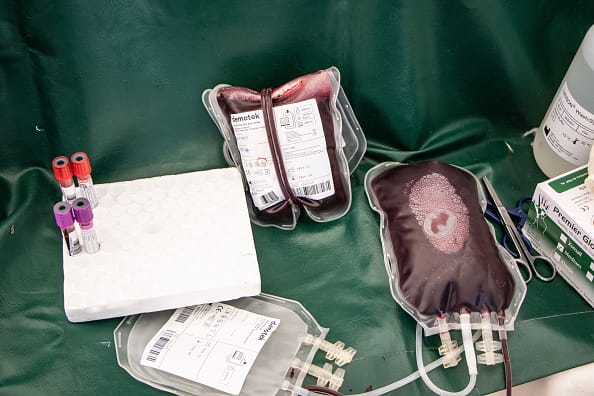
Intrauterine transfusions (IUTs) are administered to fetuses in pregnancies affected by hemolytic disease of the fetus and newborn (HDFN) to combat anemia and related complications. Fetal analgesia is recommended after the second trimester to reduce pain and discomfort for the fetus. Pain relief and management for the pregnant mother during the procedure is also important in achieving successful outcomes.
What is HDFN?
Hemolytic disease of the fetus and newborn (HDFN) is an immune-mediated red blood cell disorder that occurs when a baby’s RBCs break down quickly, which is called hemolysis. HDFN is caused by a mismatch between a mother’s and her baby’s blood type (A, B, AB, or O) or Rhesus (Rh) factor (Rh-positive or Rh-negative) during pregnancy.
The benefits of an IUT
In HDFN-affected pregnancies, following alloimmunization, the mother’s immune system attacks her baby’s red blood cells, gradually breaking them down and leading to anemia. Severe fetal anemia impacts the circulation of oxygen to the body and puts a strain on the fetus’s heart, putting it at risk of heart failure. Fluid can also accumulate in the body of the fetus. An intrauterine blood transfusion injects red blood cells from a donor into the fetus to treat anemia and prevent serious complications such as severe anemia, fetalis hydrops, heart failure and fetal death. The transfusion is either administered into the umbilical cord or into the fetus’s abdomen via the uterus.
Pain relief and pain management options
As a non-invasive procedure, the risks associated with an IUT are relatively low. In rare cases, often at less than 20 weeks’ gestation, procedure-related complications can lead to membrane rupture, preterm delivery and fetal death. An IUT has a greater chance of being complication-free if it is performed in the best conditions possible–with the medical skill and precision of a maternal-fetal specialist, a calm pregnant mother and an immobile fetus.
Fetal analgesia is essential to alleviate any pain or discomfort and reduce movement during the intervention.
Learn more about HDFN treatment and care
Medication for pain management
Maternal premedication includes antibiotics to fight potential infection and a sedative to keep the mother calm and reduce her anxiety. This is often given intravenously so it can be adjusted as needed if the procedure triggers contractions or if fetal distress means an emergency cesarean becomes necessary.
Local anesthetic will also be administered to numb the abdomen prior to insertion of the needle. The needle is then guided into the fetus’s umbilical cord with the help of an ultrasound.
Non-medical pain management
In addition to anesthesia and sedation, it can be helpful to use breathing and relaxation techniques such as positive visualization to manage pain and discomfort during an IUT. Emotional support is also very important to reassure the mother, helping her to stay calm during the procedure.