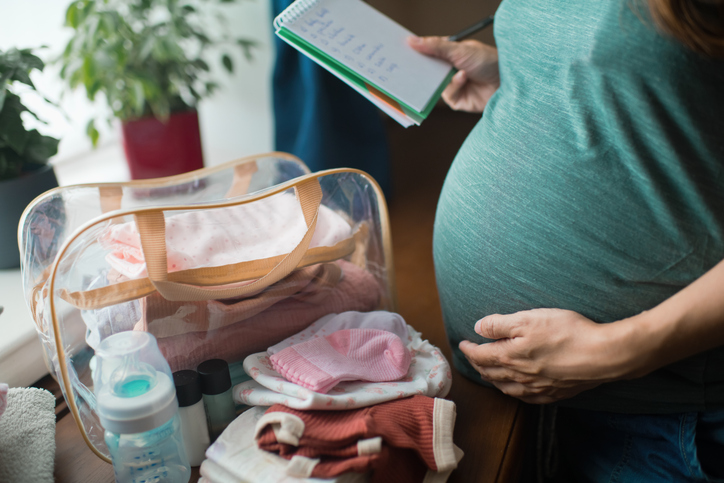
Packing your hospital bag is a key step in preparing to welcome your baby. While there are many standard essential items, personal choices will help make your postpartum hospital stay as comfortable as possible.
For higher-risk pregnancies like those affected by hemolytic disease of the fetus and newborn (HDFN), your hospital bag must be ready by 30 weeks in case of early hospitalization and delivery.
What is HDFN?
Hemolytic disease of the fetus and newborn (HDFN) is an immune-mediated red blood cell (RBC) disorder that occurs when a baby’s RBCs break down quickly, which is called hemolysis. HDFN is caused by a mismatch between a mother’s and her baby’s blood type (A, B, AB, or O) or Rhesus (Rh) factor (Rh-positive or Rh-negative) during pregnancy. Numerous antibodies to RBC antigens can be linked to HDFN, such as those from the ABO and Rh blood group systems.
Pack your hospital bag ahead of time
All pregnancies involve a lack of certainty, meaning it is best to be prepared – such as packing your bag in advance. In HDFN-affected pregnancies, your baby is monitored constantly to ensure the best possible outcomes. As a result, you may spend a lot of time at the hospital during your pregnancy for tests or medical interventions, such as an intrauterine transfusion. If you are required to stay at the hospital at short notice, it is best to have your hospital bag packed so it can be brought to you by a family member.
When you prepare your hospital bag for the birth of your baby, it is not always possible to know how long you may be required to stay at the hospital. Vaginal births have a faster recovery than cesarean deliveries, for example. Or, if your newborn experiences HDFN-related complications during delivery or immediately after, acute care in the neonatal intensive care unit (NICU) may be necessary. HDFN symptoms such as anemia and jaundice will mean intensive treatment for days or weeks, depending on the severity.
If you have a prolonged stay, be prepared to ask family and friends to help out by bringing you clean clothes and renewing other items.
Read more about HDFN FAQs
Essentials items for your hospital bag
Below is a non-exhaustive list of essential items recommended for your hospital bag.
For you:
- Important documents, including your ID, insurance details, hospital paperwork and your birth plan
- Toiletries: shower gel, shampoo, face cleansers and creams, make up, hair care, hairbrush, toothbrush, toothpaste, lip balm
- Sleepwear: pajamas or nightgown and robe
- Slippers
- Socks
- Multiple changes of clothes
- Eye mask
- Ear plugs
- A favorite pillow
- Underwear, including a nursing bra
- Books, magazines, iPad or computer (and chargers)
- Snacks and refillable water bottle
- Headphones
- Phone charger
- Maternity pads
For your baby:
- Bodysuits
- Socks
- Hat
- Cotton wraps or blankets
- Car seat (if applicable)
In addition to these items, think of ways to personalize your space at the hospital. Aromatherapy spray, photos or other comforting items from home will help create a cocoon for you during this special and occasionally emotionally charged time.