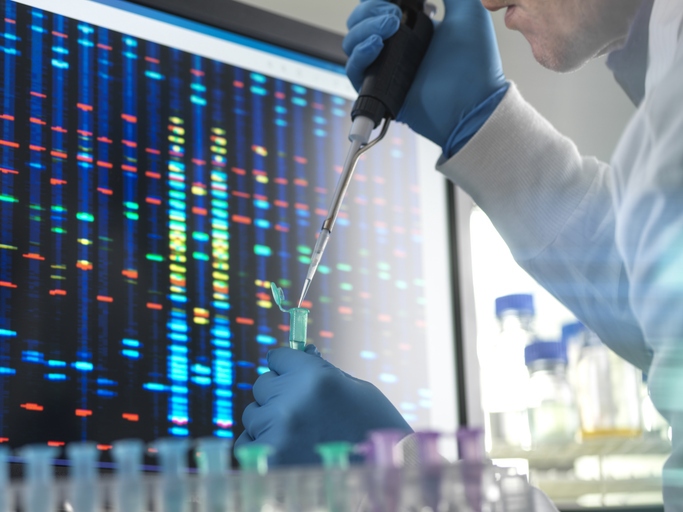
As well as identifying fetal chromosomal anomalies, prenatal genetic screening allows genetic conditions to be diagnosed and treated early, leading to better outcomes.
In pregnant women with certain risk factors for hemolyic disease of the fetus and newborn (HDFN), non-invasive prenatal testing (NIPT) is used to accurately detect fetuses at risk of HDFN, as early as 10 weeks into the pregnancy.
What is HDFN?
Hemolytic disease of the fetus and newborn (HDFN) is an immune-mediated red blood cell (RBC) disorder that occurs when a baby’s RBCs break down quickly, which is called hemolysis. HDFN is caused by a mismatch between a mother’s and her baby’s blood type (A, B, AB, or O) or Rhesus (Rh) factor (Rh-positive or Rh-negative) during pregnancy. Numerous antibodies to RBC antigens can be linked to HDFN, such as those from the ABO and Rh blood group systems.
What is genetic testing?
Non-invasive prenatal testing is designed to detect fetal antigen genotypes by screening a blood sample taken from the mother. Using advances in next-generation sequencing, the NIPT is a very sensitive test and analyzes the cell-free fetal DNA (cffDNA) which originates in the placenta and is found in the maternal serum.
The most common cause of HDFN is a Rh incompatibility in which the mother is RhD-negative and the fetus RhD-positive. In recent decades, the sysematic administration of Rh(D) immunoglobulin to RhD-negative pregnant women has dramatically reduced the incidence of RhD-associated HDFN.
However, if the fetal genotype is not RhD-positive, the administration of Rh(D) immunoglobulin is unnecessary. If NIPT identifies the fetal genotype as RhD-negative, there is no risk of HDFN. This can dramatically decrease the level of anxiety and the treatment burden throughout the pregnancy.
HDFN can be caused by other antigens and NIPT can be used to detect other blood group system genotypes, RhD, C, c, E, K (Kell) and Fya (Duffy). Accurately identifying the fetal genotype helps guide the HDFN treatment approach throughout pregnancy, delivery and following birth.
The importance of counseling
As NIPT screens for fetal anomalies, counseling is offered prior to the NIPT by a prenatal genetic counselor, explaining what to expect and how the test works. A follow up appointment will be scheduled once the results have been received, usually after two weeks.
The genetic counselor will discuss the NIPT results and what they mean. When screening for genetic conditions, the test gives a positive or high-risk result or a negative or low-risk result. If the risk is high, the counselor will provide valuable support and resources on how to manage the next steps.
In HDFN, NIPT results will identify the fetal genotype. If it is RhD-negative, this will change the overall approach to the pregnancy, with less monitoring and no Rh(D) immunoglobulin. If the result is RhD-positive, the necessary care protocol can be proactively put in place for the duration of the pregnancy. If other HDFN-associated fetal genotypes are detected, this will inform the level of care required during the pregnancy.