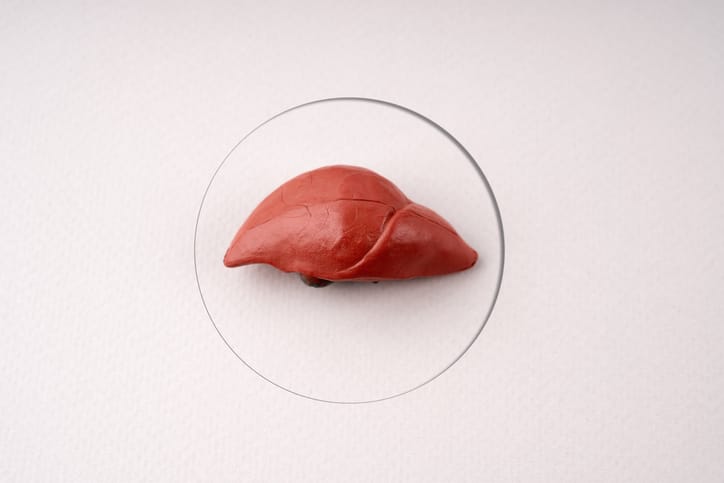
If you are a parent to a newborn diagnosed with hemolytic disease of the fetus and newborn (HDFN), you may have heard your doctor mention bilirubin or how it’s the liver’s job to process it.
But what is bilirubin, really, and how is your infant’s liver affected if bilirubin levels are too high?
What is bilirubin?
Bilirubin is a byproduct of the breakdown of red blood cells. The breakdown of red blood cells is known as hemolysis. It is a normal process and occurs typically after approximately 120 days, which is the average lifespan of a red blood cell.
However, if bilirubin levels in the body are too high, red blood cells are being broken down at an abnormally rapid pace.
Read more about HDFN overview
This is what occurs in HDFN. During pregnancy, the mother passes on antibodies to the fetus that attack and destroy red blood cells. This causes a lack of red blood cells, first in the fetus, and later in the child after delivery. Excess bilirubin can give a yellowish tinge to your child’s skin. This yellowing of the skin and sometimes the white of the eyes is called jaundice.
Excess bilirubin needs to be cleared from the body. One way to accomplish this is through intensive phototherapy. In the hospital, this appears as blue light being exposed to your child for long periods. This allows bilirubin to be more easily eliminated.
What is the liver’s role?
The liver is the organ where bilirubin is processed following the breakdown of red blood cells. The liver converts bilirubin to a form that can be easily excreted from the body, both in the stool and urine.
The rise in bilirubin driven by diseases such as HDFN necessitates the liver to work harder to excrete the excess bilirubin. If liver disease is present, the liver may not be able to cope with even a mild increase in bilirubin caused by hemolysis.
Alternatively, liver disease itself may be a case of excess bilirubin due to a breakdown of its ability to process bilirubin. This is typically seen when the liver has become fibrotic and loses some of its normal function. In cases of liver failure, the function of the liver is reduced drastically, causing normal activities to shut down. This means that bilirubin cannot be processed normally and that levels will rise.
In cases of HDFN, after a newborn receives appropriate treatment to remove the excess bilirubin accumulated in the womb, the child’s body is typically able to produce its red blood cells.
After your child is safely discharged from the hospital, you may no longer need to worry about HDFN in your child, unless complications remain. However, there is a considerable risk of HDFN in subsequent pregnancies, and you should consider speaking to your doctor about the potential risks if you plan on adding to your family through pregnancy in the future.
Sign up here to get the latest news, perspectives, and information about HDFN sent directly to your inbox. Registration is free and only takes a minute.