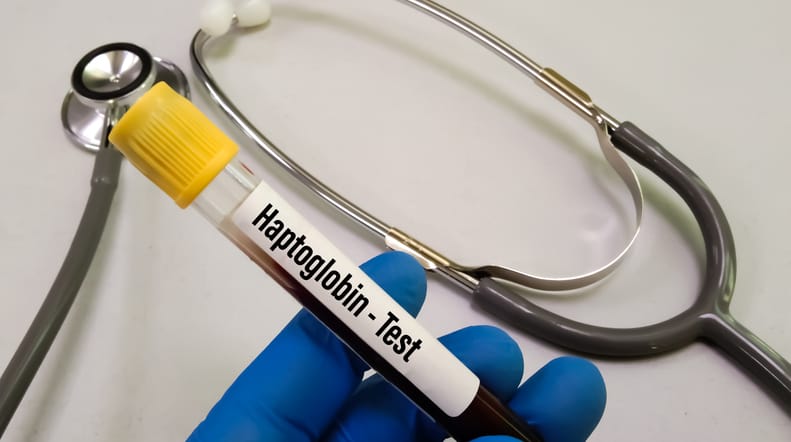
Haptoglobin levels are generally low in newborns affected by hemolytic disease of the fetus and newborn (HDFN). To understand why this is the case and whether it is a cause of concern, you should first understand what haptoglobin is and its physiological role in the body.
What is haptoglobin?
Haptoglobin is primarily produced in the liver and irreversibly binds to free hemoglobin. Hemoglobin is a substance in the red blood cells needed to bind oxygen and transport it to various parts of the body. Typically, hemoglobin is contained within red blood cells.
However, when red blood cells break down, hemoglobin is released into the bloodstream. This is the point in which hemoglobin becomes “free”. It is then the role of haptoglobin to bind to the free hemoglobin to ensure that they do not cause damage to tissues and organs.
Learn more about HDFN causes and risk factors
Haptoglobin is used as a biomarker for hemolysis, which is the breakdown of red blood cells. Because haptoglobin is activated only when red blood cells break down to produce free hemoglobin, laboratory tests of haptoglobin give doctors a good indicator of the level of hemolysis occurring in the body, which allows for subsequent medical intervention if necessary.
Why is haptoglobin low in HDFN-affected newborns?
The site of haptoglobin production is the liver. Newborns with affected HDFN generally have immature liver function. This is compounded by the fact that most newborns are born prematurely. Without adequate haptoglobin production, levels are likely to be low.
HDFN is a condition in which antibodies from the mother attack the newborn’s red blood cells, resulting in significant breakdown. A state of excessive free hemoglobin attracts the binding of haptoglobin. After haptoglobin has been bound to free hemoglobin, these complexes are rapidly cleared away by the liver and spleen.
Haptoglobin levels, once bound to free hemoglobin, become quickly depleted. Hence, haptoglobin remains a key marker of red blood cell breakdown.
What this means for your child
If you are a parent of a newborn affected by HDFN, you can rely on your care team to track your haptoglobin levels, as that is one of several metrics your doctors will track to diagnose or manage your HDFN. Your doctor will likely adjust treatment according to various blood test results, including haptoglobin levels.
Sign up here to get the latest news, perspectives, and information about HDFN sent directly to your inbox. Registration is free and only takes a minute.