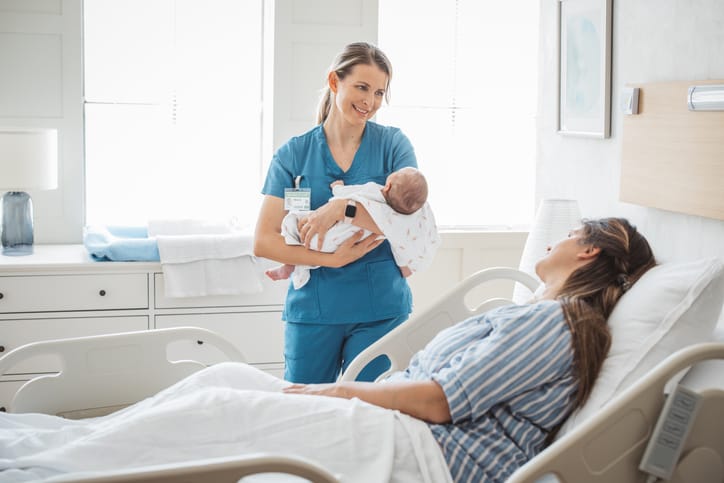

After the birth of my daughter, who was born with hemolytic disease of the fetus and newborn (HDFN), I found myself in a whirlwind of emotions and logistics I never could have anticipated.
Because local hospitals were not equipped to care for her condition, I had to deliver hundreds of miles away from home. This was completely out of my comfort zone, in a place where everything felt foreign.
Once she was born, my daughter needed to stay in the NICU for monitoring and specialized care of her HDFN. I, on the other hand, was being discharged. That’s when reality hit: I had nowhere to stay, no way to get around, and no real plan for what came next.
Still healing from a cesarean section, I physically couldn’t drive. Hotels were immediately ruled out; not just because of the cost, but because even the idea of navigating the process alone, lugging bags, and finding transportation felt impossible. The hospital did have a Ronald McDonald House on-site, but that setup required checking in and out each day. That meant I’d have to pack up all of my belongings every morning, carry a heavy suitcase while recovering from surgery, and find somewhere to go until I could check in again each night. The thought of that added an entirely new layer of stress to an already overwhelming situation.
Learn more about HDFN treatment and care
I met with a hospital social worker soon after my daughter’s birth, and she quickly became my lifeline. She understood what I was going through—not just the medical complexity, but the emotional exhaustion that comes with being a new mother separated from her baby. She took time to listen, to problem-solve and to reassure me that we’d find a solution.
At first, I did have to utilize the on-site Ronald McDonald House for a few days. It was physically hard and demanding on me. However, thanks to her persistence and advocacy, the NICU team arranged for my daughter to be moved into an individual room where I could stay with her. It was such a relief to be close—to see her tiny chest rise and fall, to be there when she stirred or cried, and to know she wasn’t alone.
A few days later, the social worker called with even better news: she’d managed to secure me a spot at the off-site Ronald McDonald House. It was a safe, quiet place to stay, close enough to the hospital that I could visit my daughter anytime I needed. I ended up spending several days there, and though it wasn’t home, it was filled with kindness and compassion from others who understood what it meant to have a sick child in the hospital.
Looking back, that social worker was more than just a professional doing her job. She was a true blessing! She not only found me a place to stay but also provided resources for NICU families, postpartum recovery, and even billing guidance, which was another overwhelming aspect of the whole ordeal. She advocated for us when I didn’t have the energy or clarity to advocate for myself.
Social workers play such a crucial role during moments like these. They are often the bridge between survival and stability, helping families navigate some of the hardest days of their lives. In my case, she helped me hold it together when everything felt like it was falling apart. I’ll always be grateful for her compassion, her persistence and her belief that even in chaos, families deserve support and dignity.
Sign up here to get the latest news, perspectives, and information about HDFN sent directly to your inbox. Registration is free and only takes a minute.