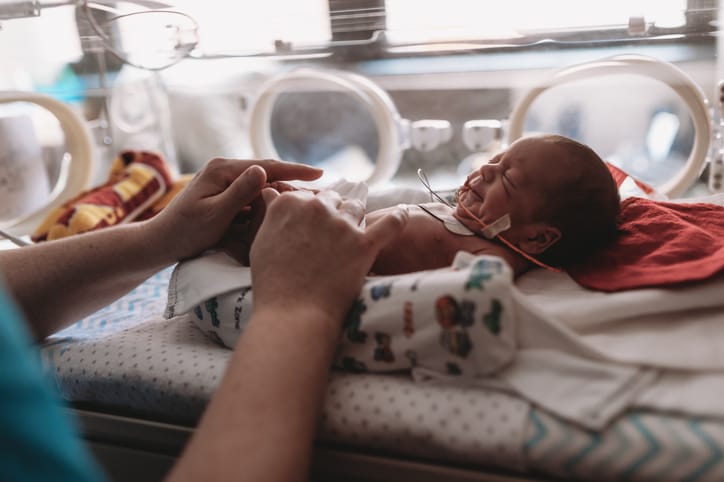

Hospital trauma is a real and often overlooked experience that affects parents long after the birth of their child. Though my family and I were fortunate to have an exceptional medical team caring for our baby with hemolytic disease of the fetus and newborn (HDFN), the emotional and psychological toll of returning to the hospital was far more difficult than I ever anticipated. The trauma of our experience lingered long after the medical team had done their part.
My journey was particularly grueling, beginning with one emergency blood transfusion and two planned transfusions before birth. The emergency transfusion was my first intrauterine blood transfusion (IUT), and the uncertainty was overwhelming. I didn’t know what to expect, but I knew my baby desperately needed the blood.
Learn more about HDFN symptoms and risks
Undergoing treatment during pregnancy
But then, something else unexpected happened. Just before the surgery, I tested positive for COVID-19, and the entire procedure was delayed as they followed strict protocols. The uncertainty I felt during that time was compounded by the fear of both my health and my baby’s, but there was no choice but to wait.
Fortunately, the two planned IUTs went much more smoothly, but the relief was short-lived. After the second and third transfusions, my body began to react—contractions set in, and the baby developed an irregular heart rhythm. Both of these were known side effects of the procedure, but that knowledge didn’t make it any less frightening when they happened to us. The risks of a premature birth became all too real.
When I came for my scheduled Cesarean section two weeks later, I still had new and frightening experiences. I had never had a Cesarean before, and the thought of going through it, on top of everything else, was terrifying.
Birth and recovery
When my baby was born, it was a blur. The NICU team arrived almost immediately, swooping in to take her without giving me a moment to bond. There were no first touches and no shared gaze between mother and child, just the heart-wrenching cries of my newborn. In that moment, I didn’t know whether to feel relieved that she was crying or terrified that something was wrong. As the measurements were announced, they whisked her away to the NICU for further evaluation.
The hardest part was being in recovery, separated from my baby, and not knowing her status. Each minute felt like an eternity. She spent over a week in the NICU, and during that time, my emotions swung from hope to despair and back again. There were good moments and setbacks, with a constant undercurrent of fear.
To this day, those memories are traumatic. The experience has left me with a deep emotional scar that prevents me from ever returning to that hospital, even for something as simple as a checkup or future pregnancy. The weight of the trauma is so great that I couldn’t bear to expose myself or my children to it again.
Thankfully, that hospital is over four hours away from my home, with a dozen hospitals between, making it unlikely I would ever have to return. But even the thought of revisiting those halls fills me with dread, and the emotional toll remains a part of me, the experience is also a reminder of the resilience I had to find during one of the hardest chapters of my life.
Sign up here to get the latest news, perspectives, and information about HDFN sent directly to your inbox. Registration is free and only takes a minute.