CANCÚN, Mexico—Molly Sherwood of Lexington, Kentucky, spent 10 years as a pharmaceutical research industry consultant focused on clinical trial design and regulatory engagement with the U.S. Food and Drug Administration (FDA).
“I thought I would do that forever,” Sherwood said. But life had other plans in store for her.
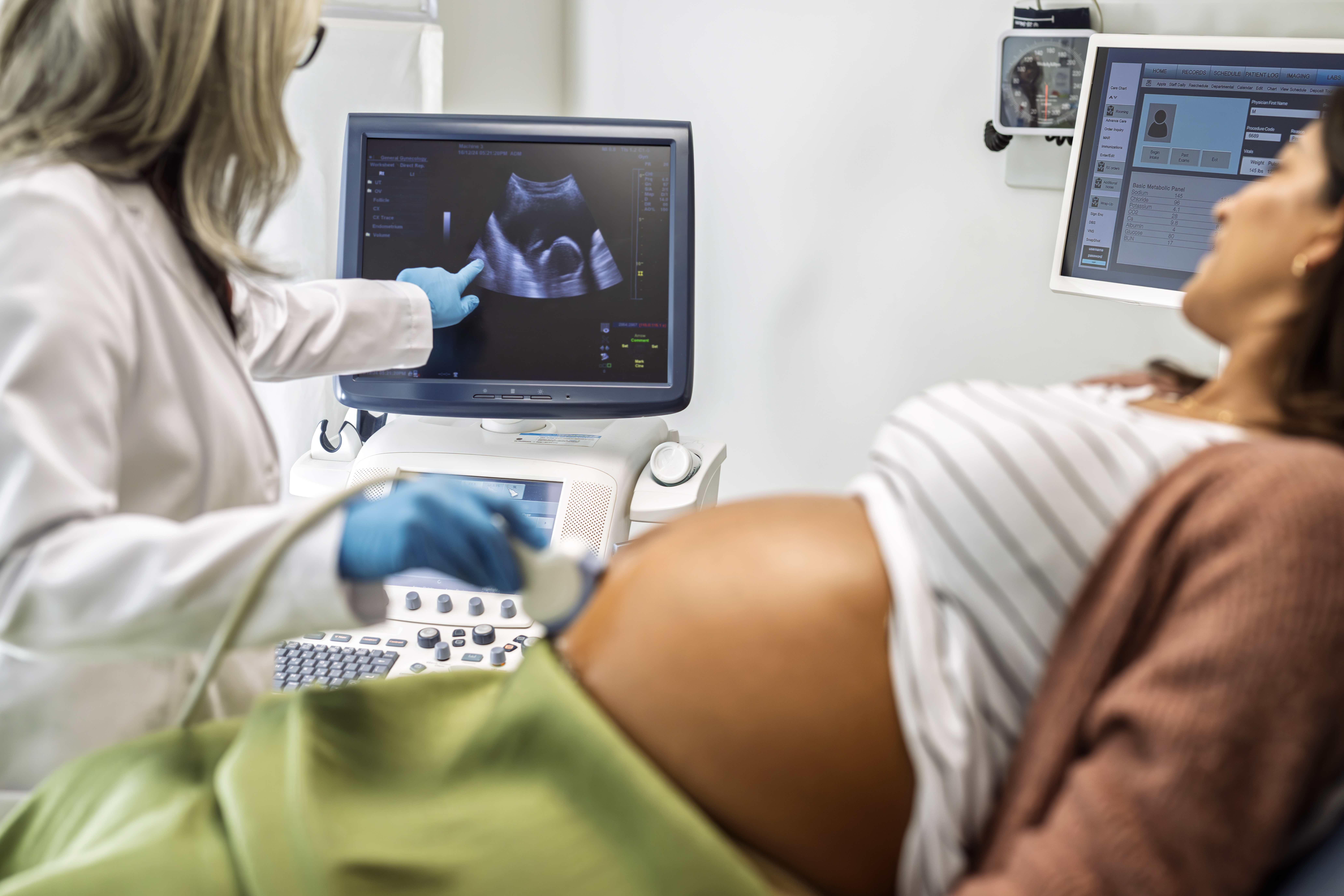
Seven years ago, during her second pregnancy, Sherwood learned she had antibodies that could cross the placenta and destroy her unborn son’s blood, potentially killing the fetus without proper treatment. Those antibodies meant the unborn child was at risk of developing hemolytic disease of the fetus and newborn (HDFN).
“I was led down the path of researching my own disease, but found a real lack of resources and support,” Sherwood told HDFN Companion by phone. She later discovered the Allo Hope Foundation, a nonprofit founded by Bethany Weathersby and based in Tuscaloosa, AL.
Moving research forward
Today, Sherwood is the group’s director of research.
“We saw a huge, glaring need to educate people about the proper care for this disease, which should be quite survivable with the right treatment,” she said. “All of our leadership has had alloimmunized pregnancies. We were all led away from our original careers to do this work.”
Established in 2019, the foundation runs a patient support group for more than 2,000 affected mothers throughout the United States and overseas.

“We travel internationally to speak at conferences, and we host blood donations, which are very important because our babies need blood transfusions to survive,” Sherwood said. HDFN, she said, affects about 60,000 newborns in the US annually. Only 1.7% of all pregnancies have red blood cell antibodies—and only a fraction of those go on to cause HDFN.
“There are ways to treat our disease,” she said, “but they must be done on time and by a very skilled practitioner. We send patients to one of only a small number of doctors in the country. Across the world we see huge gaps in care and babies dying needlessly.”
Recent trials show promise
One such expert is May Lee Tjoa, PhD, senior global medical affairs leader at the maternal and fetal immunology division of Johnson & Johnson (J&J) Innovative Medicine. A Dutch molecular biologist, Dr. Tjoa joined Momenta Pharmaceuticals in 2020 as medical affairs director, then stayed on after J&J acquired that company the following year.
Dr. Tjoa spoke with HDFN Companion on the sidelines of the 2025 annual conference of the International Society of Ultrasound in Obstetrics and Gynecology (ISUOG) in Cancún, Mexico.
“If you are a Rhesus-D negative woman and you are now positive with a Rhesus-D positive baby, you’d be eligible to receive Rhesus immunoglobulin, also known as RhoGAM, in the US,” Dr. Tjoa said, adding that RhoGAM is generally given at the end of the second trimester or beginning of the third, followed by a second injection after delivery.
At least 50 antigens can cause alloimmunization during pregnancy, but the most common is Rhesus-D.
“Unfortunately, not all women receive both doses, so this can lead to alloimmunization,” Dr. Tjoa said. “It’s also possible that women become alloimmunized despite having received both doses.”
Janssen Research & Development, which, like Momenta, is under the J&J umbrella, had begun a phase 2 trial in HDFN for nipocalimab, an investigational FcRn blocker that’s believed to prevent the placental transfer of maternal immunoglobulin G during pregnancy.
That trial, known as the UNITY study, has since been completed, and Janssen has initiated a phase 3, placebo-controlled randomized trial known as AZALEA to study the efficacy and safety of nipocalimab in treating pregnancies at risk for severe HDFN. That trial is being conducted at 56 sites in 17 countries.
Hope on the horizon
“The phase 2 results for nipocalimab were very encouraging,” Sherwood said. “We know a lot of those moms personally, and some of those outcomes were just incredible. Previously, they couldn’t imagine having a living child because they had such severe disease. None of them had had a live birth after 32 weeks.”
But after receiving the medication, things changed.
“One mom who had lost three children full-term enrolled in the trial and later had a beautiful, healthy daughter,” she said. “This drug is a great equalizer. Right now, the only treatment for HDFN is an intrauterine blood transfusion, or IUT. That is extremely technical and highly dependent on the clinician’s expertise. So a lot of moms have complications because it’s very risky, and they have to travel to find someone who can safely do an IUT.”
But a pharmaceutical intervention could remove much of that potential risk, she said, as well as the travel burden.
Nipocalimab also has potential when it comes to a related disease, fetal and neonatal alloimmune thrombocytopenia (FNAIT)—an alloimmune condition of pregnancy that is similar to HDFN.
“In HDFN, the mother has developed antibodies against fetal red blood cells because there’s a mismatch in the antigen status of the red blood cells between the mother and baby,” Dr. Tjoa explained. “In FNAIT, the alloantibodies are directed against fetal platelets. It’s a similar mechanism of disease in which the alloantibodies cross the placenta, but with FNAIT, these alloantibodies target fetal platelets, not fetal red blood cells.”
Left untreated, FNAIT can lead to fetal thrombocytopenia.
“In the most severe cases, babies may be affected by an intracranial hemorrhage, and this is a severe brain bleed. Babies who are thrombocytopenic may also have other bleeds in the GI tract,” Dr. Tjoa said. “We believe nipocalimab can block FcRn in the placenta, preventing the transfer of those alloantibodies directed against fetal platelets.”
A look at treatment costs
Elizabeth Hsia, MD, presented a paper at this year’s ISUOG conference on resource use and costs for children in Sweden with HDFN. She is J&J’s senior director of immunology data science and digital health.
Dr. Hsia said she selected Sweden because of the high quality of its healthcare system, explaining that “these registries serve as a good database to look at population-based diseases—especially rare ones—because then you have a large data set to work with.”
Her study looked at 14,519 live births in Sweden between 2001 to 2021, of which roughly half (7,289 infants) were diagnosed with HDFN. Of the total, 1,950 (or 27% of HDFN infants) received HDFN treatments; 149 (8% of treated) received intrauterine transfusion, or IUT; 602 (31% of treated) received postnatal transfusion; and 1,750 (90% of treated) received phototherapy.

“All those treatments are standard of care,” she said. “It depends on when the anemia for the baby manifests. In severe HDFN, it manifests in the fetus. That’s why fetal anemia develops, and then you need an IUT to treat it. Otherwise, the baby could die. Then the other ones are postnatal, or after‑birth treatments.”
As expected, she said, babies that received IUT and postnatal transfusions registered the highest costs, atop the highest direct costs, in their first year of life.
“Interestingly, it was the postnatal transfusion babies who didn’t receive IUT that persistent higher healthcare resource utilization and direct costs beyond the first year, into about year four,” she said.
In terms of actual costs, hospital bills averaged about €25,000 per patient in the first year, dropping significantly in subsequent years. For babies that received transfusions—but not IUT—after birth, the costs remained in the €8,000 range, compared with around €3,000 for the other groups.
“People often forget, after pregnancy, what happens later on,” she said. “We should keep in mind that prenatal treatments could potentially have longer‑term effects, not just immediately after birth but in their later years as well.”