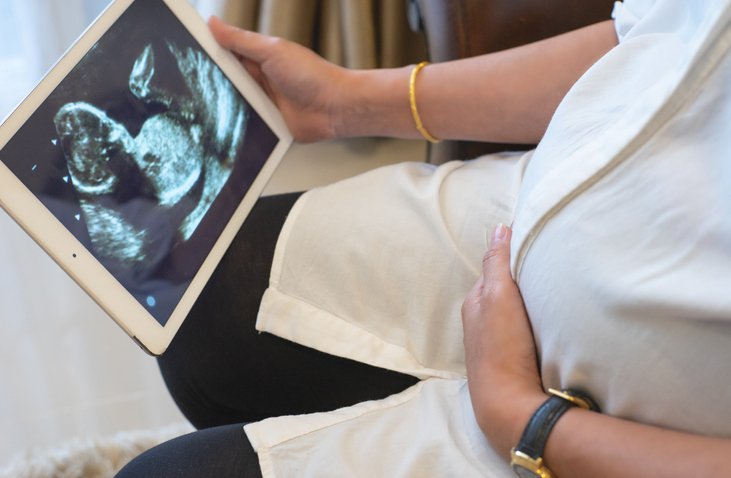
An intrauterine blood transfusion (IUT) is a medical procedure performed on a developing fetus in the womb, usually to treat severe anemia or blood disorders. It’s a complex and delicate procedure that my child and I had to experience. In some cases, this treatment is life-saving for babies. Here is the in-depth process of IUTs from my perspective to hopefully give insight to other mothers who may have to experience this.
HDFN Diagnosis
My baby was being monitored for fetal anemia by my maternal fetal medicine doctor. Doctors typically monitor blood flow in the fetal brain using a specialized ultrasound technique called Doppler ultrasound. This allows them to assess blood flow in various arteries, including the Middle Cerebral Artery (MCA), which is commonly monitored to assess anemic fetuses. By measuring the blood flow in the MCA, healthcare professionals can determine the severity of fetal anemia and plan appropriate interventions such as intrauterine blood transfusions, if necessary.
Once the MCA is measured, doctors use this to calculate a Multiple of the Mean (MoM). Once the MoM calculation is over 1.5, doctors typically agree that is the threshold for anemia. This diagnosis is the first step toward an IUT procedure. The second step was a fetal Echocardiogram on my baby’s heart. Doctors wanted to make sure she had a healthy enough heart to endure this procedure. With a good heart echo, she was deemed a good candidate for an IUT.
Read more about HDFN treatment and care
Preparation for IUT treatment
Due to the severity of my baby’s anemia, we were admitted to a hospital the same night of the MCA test, four hours away from home. The procedure was scheduled for the next morning with a doctor that I had not met. If your baby is diagnosed with HDFN, you will likely find that there are not a lot of specialists who perform this type of surgery because HDFN is a very rare disease.
In general, the mother will be admitted to a specialized maternal-fetal medicine center, whether a hospital or private clinic. The medical team explains the process and answers any questions the patient has. At the hospital where my IUTs were performed, they swabbed for COVID and drew blood labs.
The procedure
Before the procedure, doctors use local anesthesia to numb the belly. I received medication to help me stay calm for the procedure. During the procedure, several doctors and nurses monitor you closely. The doctor will place a thin needle through the mother’s abdomen and into the womb. Using an ultrasound, doctors will guide the needle to your baby’s umbilical cord.
The medical team then draws a small sample of the baby’s blood and tests it. They then have information including the blood type and blood counts. This tells the doctor what type of blood and how much blood the baby needs.
I never felt any pain in this procedure. The only side effect I had were drops in blood oxygen causing me to fade in and out of consciousness. I was also extremely nauseous.
Blood exchange
Based on the information from the baby’s blood test, blood will be given to the baby through the needle. This helps correct the anemia or blood disorder.
Monitoring
After the procedure, doctors and nurses monitored me and the baby. They watch to make sure the baby wakes up and begins moving again. They also monitor the mother for any contractions or signs of labor.
Risks
While it’s generally safe, there are some risks that the healthcare team will discuss. They’ll take every precaution to minimize potential complications. However, I personally had a few complications including contractions and my daughter had heart arrhythmia after the procedure.
The importance of emotional support Undergoing this procedure can be emotionally challenging. It’s crucial to have a supportive healthcare team and access to emotional support to help you through the process.
I broke down after my third intrauterine transfusion (IUT). I was traumatized after enduring labor contractions for 13 agonizing hours. Despite the doctors’ efforts to halt them using fluids and medications, nothing proved effective. Unfortunately, they couldn’t administer a spinal block or pain relief due to the pre-term labor.
This experience was emotionally overwhelming because all I wanted was to ensure my baby’s safety and hold her in my arms. I was terrified that my body might jeopardize her well-being. Consequently, I reached out to the healthcare team and explained the immense emotional stress I was experiencing. Initially, the doctor was hesitant, but at the one-week post-op check, he finally concurred that it was time to deliver my baby.
The Takeaway
IUT is a vital, albeit challenging, medical procedure for babies diagnosed with severe in-utero anemia or blood disorders. The diagnosis process involves specialized ultrasounds and fetal echocardiograms, determining the need for IUT. Preparations often entail travel to specialized centers and thorough medical discussions. The procedure itself, while generally painless, requires careful monitoring and may lead to side effects.
Risks exist, as seen in my complications, such as contractions and heart arrhythmia. Emotional support is paramount, as the emotional toll can be profound. My own experience underlines the importance of supportive healthcare teams and emotional resilience in the face of adversity, ultimately prioritizing the baby’s safety. I hope that this helps anyone who may have to endure this procedure.